Lubricant Gel Uses: What It’s For and What’s Actually Worth Buying
Lubricant gel gets buried on most Pakistani retail sites under a dozen condom listings, which is a shame, because it solves a completely different problem. Condoms are about protection. Delay products are about timing. Lubricant gel is about friction and comfort — full stop — and it’s useful in situations that have nothing to do with either of the other two categories.
What Lubricant Gel Is Actually For
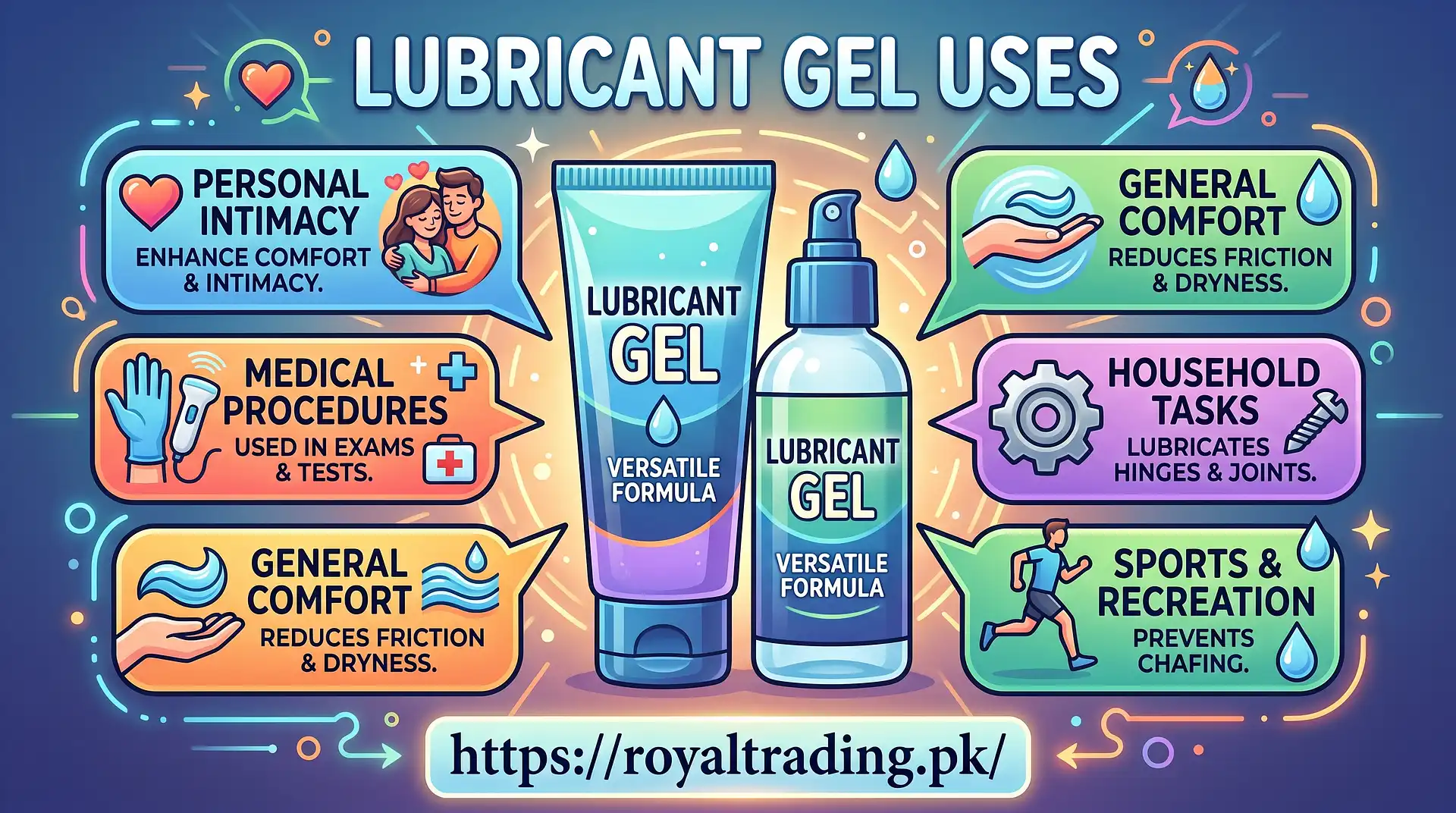
The core function is reducing friction, which sounds simple but covers a lot of ground. Natural lubrication varies by person, by moment, by hormonal factors, by medication, by simple nerves — it’s not a fixed quantity, and needing supplemental lubrication isn’t a sign anything is wrong. Lubricant gel closes that gap directly, making penetrative sex more comfortable and reducing the friction-related irritation or minor tearing that can otherwise happen, which matters for comfort and also lowers unnecessary friction-related risk during intercourse.
It also has uses outside penetrative sex specifically. A water-based gel reduces friction during manual stimulation, and flavored variants exist specifically to make oral sex more enjoyable without introducing an unpleasant taste. None of that requires a medical reason — comfort and enjoyment are a legitimate reason on their own.
Takeaway: needing lubricant isn’t a problem to solve — it’s a normal variable to plan for, the same way you’d plan for any other comfort factor in sex.
Water-Based vs. Other Types
This part matters more than most buyers realize, specifically because of condom compatibility.
Water-based lubricants are condom-safe across the board — they don’t degrade latex, they clean up easily, and they’re the default recommendation when a lubricant needs to be used alongside a condom. Both products in this catalog fall into this category.
Silicone-based lubricants last longer without reapplication and hold up well in water, but they’re not compatible with silicone sex toys, since silicone-on-silicone contact degrades the toy’s material over time.
Oil-based lubricants — including some massage oils and petroleum-based products — actively break down latex. Used with a latex condom, an oil-based lubricant can cause the condom to weaken or fail, which defeats the purpose of using one in the first place. This isn’t a minor compatibility footnote; it’s the single most important thing to get right if a condom is part of the equation.
Royal Trading’s current catalog only stocks water-based options, which sidesteps this issue entirely rather than requiring the buyer to check compatibility themselves.
The Real Options at Royal Trading
Two products, both from Josh, both water-based, both priced identically.
Lube Gel by Josh | Fantasy Natural — Rs. 550 (down from Rs. 605), 30ml. Unscented and unflavored, positioned as a straightforward, fragrance-free option — the listing specifically notes it’s suited to sensitive skin. This is the one to reach for if you want the friction-reduction benefit without any added scent or taste.
Lube Gel by Josh | Strawberry Scented — Rs. 550 (down from Rs. 605), 30ml. Same water-based formulation, with a strawberry fragrance added. Both are listed as condom-compatible, consistent with their water-based formulation.
Neither product has an accumulated review history on the live listing yet, which isn’t a red flag — it just means there’s no buyer feedback to weigh alongside the product description at this point.
Takeaway: the choice between these two isn’t really about performance — they’re the same base formulation — it’s purely about whether you want a scent involved or not.
How to Use It
A few practical points that make a real difference in outcome:
- Apply directly to the area of contact — externally, or onto the condom exterior once it’s on — rather than trying to make a small amount cover more area than it can.
- Reapply as needed during a longer session rather than assuming one application lasts indefinitely; water-based formulas dry out faster than silicone-based ones, which is a fair tradeoff for their condom compatibility.
- If you have sensitive skin or you’re trying a scented variant for the first time, a small patch test is a reasonable precaution before full use — this applies to any new personal-care product, not just this one.
- Store the tube properly closed and away from heat, and check that the product hasn’t separated or changed texture before use, particularly if it’s been open for a while.
The Honest Limitation Here
This is a thin sub-category compared to the rest of the catalog. Both available products are water-based, both are the same brand, and both are the same 30ml size — there’s no silicone-based option for anyone who specifically wants longer-lasting lubrication, and no larger size for anyone using it regularly rather than occasionally. That’s not a flaw in either individual product; it’s a gap in the range as a whole, worth knowing before assuming there’s more variety here than there actually is.
Where This Leaves You
If you need a straightforward, condom-safe lubricant gel, both current options do that job — the only real decision is scented versus unscented, since the underlying formulation doesn’t otherwise differ between them. If you specifically need a silicone-based or larger-format option, that’s a genuine gap in this particular catalog rather than something to search for within it.
FAQ Section
Can lubricant gel be used with condoms?
Water-based lubricants, like both products in this catalog, are condom-safe and won’t degrade latex. Oil-based lubricants and some massage oils should not be used with latex condoms, since oil breaks down latex and can cause the condom to fail.
Is water-based or silicone-based lubricant better?
Neither is universally better — water-based is condom-safe, easy to clean, and suits most situations, while silicone-based lasts longer without reapplication but isn’t compatible with silicone toys. The right choice depends on what you’re using it alongside.
Is flavored lubricant gel safe for oral sex?
Flavored, water-based lubricant gels, like the strawberry variant covered here, are specifically formulated for this use case. As with any new product, a patch test is a reasonable precaution if you have sensitive skin or allergies.
Does lubricant gel expire?
Yes, like most personal-care products, and using it well past its shelf life or after the texture or smell has changed isn’t recommended. Check the product for a printed expiry date and store it away from heat.
Is needing extra lubrication a sign something is wrong?
No. Natural lubrication varies for entirely normal reasons — timing, hormones, medication, or simply the moment — and using a lubricant gel is a comfort and enjoyment choice, not a response to a problem.
This post explains what lubricant gel is and how it is normally used at home. Read on for simple, practical guidance written in plain and easy words.
Lubricants reduce friction and make intimacy more comfortable for both partners involved. This post covers the gel type in plain and simple detail for readers.
Water based gels are used to reduce dryness and friction during intimacy. They wash off easily with water and are safe to use with condoms.
This is an informational post, so prices are not listed here. Please check the lubricant product pages in the shop to see the current prices.
Water based lubricant gels are the most common type and rinse off easily with water. This post explains their uses in simple and clear words.
Josh makes a water based lubricant gel used to reduce friction and dryness. This post explains in simple words how such gels are generally used.
A water based gel helps with dryness and can be used safely with condoms. This post explains the common uses in plain and simple language.
Lubricant gel is a slippery gel that reduces friction and dryness during intimacy. This post explains the whole topic in simple English for easy understanding.
It is used to reduce dryness and friction, making intimacy smoother and more comfortable for users. This post gives the full details in simple words.
This post is written in simple English, which is easy to follow even for Urdu readers. It explains lubricant gel uses step by step in clear detail.
Many people use it to reduce dryness and friction, making intimacy more comfortable overall. This post covers all the details in simple and easy English.
This is a guide post, not a product page, so no price is listed here. Visit the lubricant listings in the shop for current prices.
Silicone based gels last longer than water based ones but need soap to wash off properly. This post mainly covers gel uses in general terms.
In short, it is a smooth gel that makes intimacy more comfortable by reducing friction. Read this post for the full explanation in simple and clear English.
Josh lubricant gel is a well known personal lubricant sold in Pakistan, usually in small bottles in scents like strawberry. Royal Trading's current range focuses on condoms and delay products, and this guide explains what to check before buying any lube gel.
Josh lube gel is one of the commonly searched lubricant brands in Pakistan. This guide covers how lube gels work, what the scents mean, and what to look for on the label before you buy.
Short for Josh lubricants, a range of personal gels sold in the Pakistani market. This post explains what they are for and how to choose one, even though Royal Trading currently stocks condoms and delay products rather than lubes.
The strawberry version of Josh lube gel is a scented personal lubricant. Scent is purely a matter of preference and does not change how the gel works, as this guide explains.
People use lube gel to reduce dryness and friction during intimacy, making things smoother and more comfortable. A small amount is usually enough, and this guide walks through the common uses.
Josh gel usually means the brand's personal lubricant, not a medicine. It is meant for external use to add smoothness and comfort, and this guide explains the basics in simple words.
The main benefit is simple: less friction and more comfort for both partners. Scented versions add a pleasant smell but work the same way, as explained in this guide.
Prices for lubricant gels in Pakistan vary by brand, size and seller, so it pays to compare a few trusted shops. This guide focuses on choosing the right product rather than quoting a price that quickly goes out of date.
The benefits are easy to understand in any language: smoother, more comfortable intimacy with less dryness. This guide keeps the explanation simple so every reader can follow it.
Lube gel prices in Pakistan change often and differ from shop to shop. Compare current rates at a few reliable sellers before ordering, and use this guide to make sure you pick the right type.
Rather than a fixed number, expect lube gel prices to vary by brand and bottle size. Check two or three trusted Pakistani sellers for the current rate, and read this guide first so you buy the right kind.
A lube gel is used to reduce friction and dryness during intimacy, making things more comfortable for both partners. This guide covers each common use in plain words.
Gel prices in Pakistan depend on the brand and where you buy. This guide will not quote a figure that goes stale; instead it helps you choose wisely and compare sellers.
A lube gel is a slippery personal product that reduces dryness and friction during intimacy. This guide explains the types, the uses, and what to check on the label.
The strawberry Josh gel is used like any personal lubricant: a small amount applied where needed before intimacy. Scent does not change the job it does, which is adding smoothness.
A lubrication gel adds moisture where the body falls short, making intimacy smoother and more comfortable. Water based gels are the most common and the easiest to clean, as this guide explains.
Used as directed, lube gel is generally gentle, though anyone with very sensitive skin should do a small patch test first and stop if irritation appears. This guide keeps the advice simple for every reader.
A lubricating gel is a simple way to add comfort where natural moisture is low. This guide walks through the types and helps you pick one that suits you.
A water based gel lube is easy to clean with water and suits most people, which is why it is the most popular type. This guide explains how it differs from silicone based options.
The uses are simple to grasp: a small amount of gel for smoother, more comfortable intimacy. This guide explains everything in plain words any reader can follow.
This guide compares the main types of lubricant gel side by side, water based against silicone based, so you can see the differences in comfort, cleanup and use in one place.
This is a written guide rather than a photo gallery, so the details are all in the text above. If you were after product photos, the shop's product listings show pack images where available.
An honest note: a lubricant is not a delay or timing product, so it will not increase timing on its own. It only makes intimacy smoother. For timing support, delay sprays and delay condoms are the relevant products.
You probably mean lube gel, a slippery product that reduces dryness and friction during intimacy. This guide explains the types and uses in simple words.
In simple English: a lube gel is used to reduce dryness and friction during intimacy, making things smoother and more comfortable. This guide gives the full picture.
Josh Fantasy is the natural, unscented variant in the Josh lube gel range. Unscented gels suit people who want the comfort without any added fragrance, as this guide explains.
You may also like: Knight Rider Delay Spray and our best condom brands in Pakistan guide.