How to Sterilize Baby Bottles: Every Method, and What to Check First
There’s no single correct way to sterilize a baby bottle — there’s a method that fits the bottle you actually own, and picking one without checking that first is how bottles get warped, cracked, or damaged well before their time. Before getting into methods: if you came here expecting a sterilizer or sterilizing tablets to buy alongside a bottle, that’s worth knowing upfront — that’s not currently a product category this catalog stocks, only the bottles themselves.
Wash First, Every Time
Sterilizing isn’t a substitute for washing — it’s the step after it. Warm water, dish soap, and a dedicated bottle brush to get into the corners of the bottle and the folds of the nipple, followed by a thorough rinse to clear any soap residue. Skipping straight to sterilizing without this step just sterilizes whatever residue and milk film is already on the bottle, which defeats the purpose.
The Main Sterilization Methods
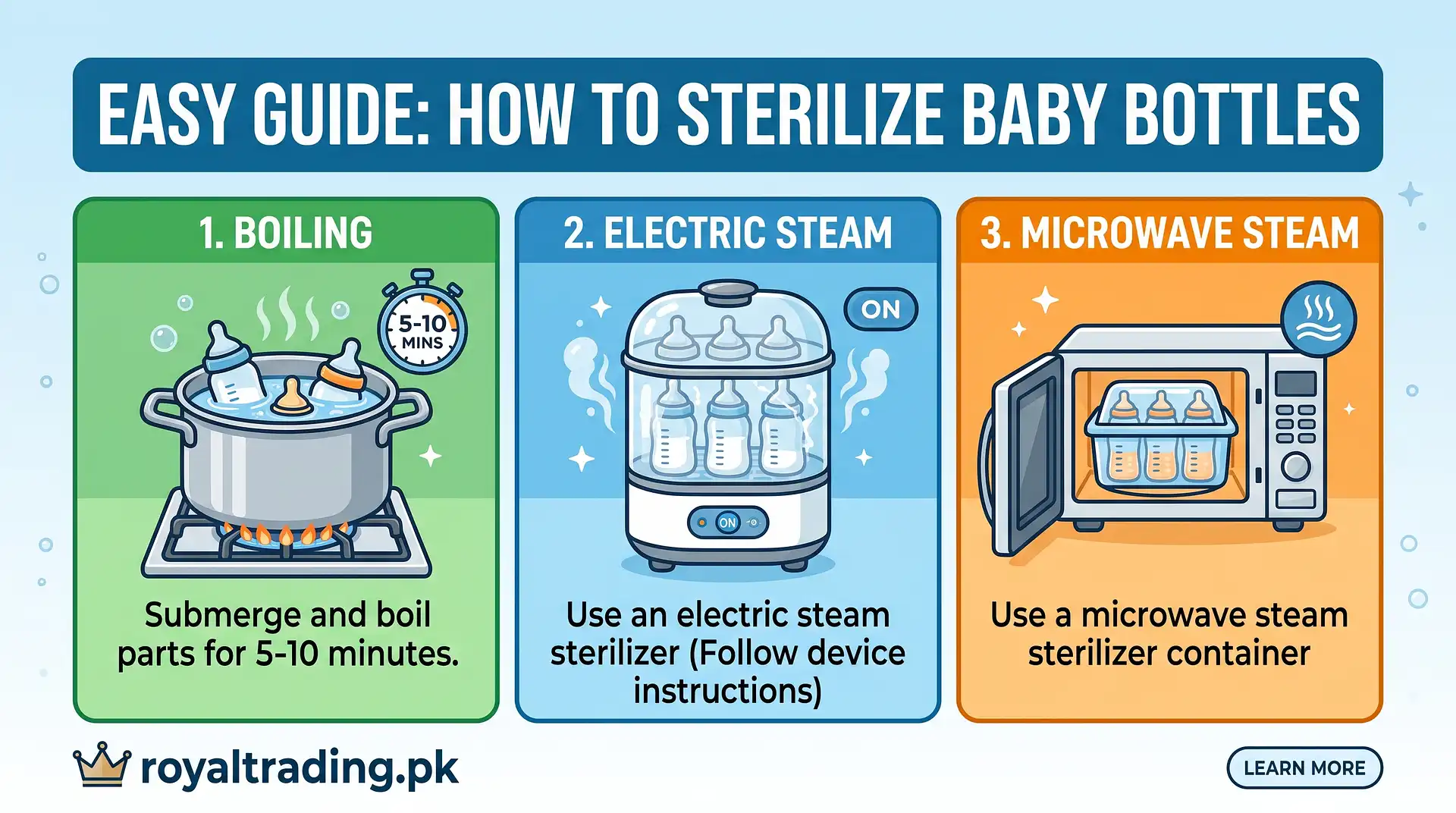
Boiling. Fully submerge clean bottles, nipples, and caps in a pot of water, bring it to a boil, and let it boil for around five minutes, making sure no air pockets are trapping bottle parts at the surface. This is the most accessible method — it needs no special equipment — but it’s also the hardest on nipples and softer plastic parts over repeated use, since consistent boiling accelerates wear.
Steam sterilizing. Either a dedicated electric steam sterilizer or a microwave-safe steam bag achieves the same result faster than boiling, typically in a few minutes, using steam rather than full submersion. This is gentler on parts than repeated boiling and is the method most parents shift to if they’re sterilizing multiple times a day.
Cold-water sterilizing solution. Bottles are fully submerged in a solution mixed from sterilizing tablets or liquid concentrate and left to soak for the time stated on the product, generally around 30 minutes to a few hours depending on the product, with the solution itself needing to be replaced roughly every 24 hours. This method doesn’t use heat at all, which makes it the safest option for parts that can’t handle repeated boiling or steam.
Dishwasher. If a bottle is explicitly labeled dishwasher-safe, a hot cycle with a heated dry setting can sterilize as part of a normal wash — but this only counts as sterilizing if the cycle actually reaches a high enough temperature, which not every dishwasher setting does. This is a convenience method, not a guaranteed sterilizing method, unless the specific cycle is confirmed to reach sterilizing temperatures.
UV sterilizers. Newer, more expensive devices that use UV light rather than heat or chemical solution. Effective and gentle on materials, but a genuinely premium option compared to the other four, and not something every household needs to invest in for it to be a reasonable choice.
Takeaway: boiling and steam are the two most accessible methods for most households; cold-water solution is the better choice specifically when a part can’t tolerate repeated heat exposure.
Check Your Specific Bottle First
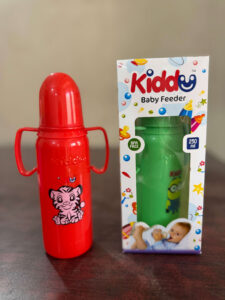
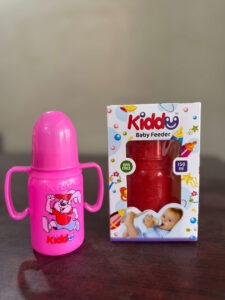
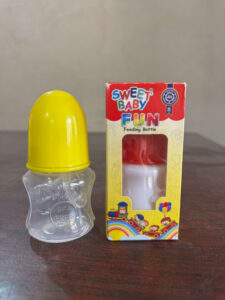
This is the part that actually matters before choosing a method, and it’s a real gap worth naming directly: none of the Kiddu, Shield, or Sweet Baby bottle listings in this catalog state whether the bottle is glass or plastic, or explicitly confirm it’s boil-safe, microwave-safe, or dishwasher-safe. That’s not unusual for a retail listing, but it does mean a buyer can’t confirm compatibility from the product page alone. Before boiling or microwave-steaming any bottle from this catalog specifically, confirming material and heat tolerance directly with the seller is the safer move — guessing wrong on this one is how a bottle ends up warped or, worse, with a compromised seal that isn’t obvious just from looking at it.
How Often to Sterilize
General guidance from health authorities commonly recommends sterilizing bottles regularly through roughly the first year, since a younger baby’s immune system has less built-up resistance to the bacteria that can grow in feeding equipment. Exact recommendations vary somewhat by health authority and by individual pediatrician guidance, so this is a reasonable general starting point rather than a fixed rule — if you have specific questions about your baby’s situation, that’s a conversation for your pediatrician, not a product listing or a blog post.
You Might Also Like
Drying and Storage
However you sterilize, let parts air-dry fully on a clean rack rather than towel-drying them — a towel, even a clean one, can reintroduce bacteria that the sterilizing step just removed. Store dry, sterilized parts either fully assembled or covered until next use, rather than leaving them exposed on an open counter.
The Honest Limitation Here
This guide can tell you how the major sterilization methods work in general. It can’t tell you, with certainty, which method is safe for any specific bottle in this catalog, because none of the current listings disclose the material information that would answer that question. That’s a real gap in the product pages, not in the sterilization methods themselves — and it’s worth Royal Trading adding material and heat-tolerance details to each bottle listing, both for this article’s sake and for any customer trying to make this exact decision independently.
Where This Leaves You
Boiling is the simplest starting point if you don’t already own sterilizing equipment and your bottle’s material is confirmed safe for it. Cold-water solution is the safer default if you’re not sure a part can handle repeated heat. Either way, confirm compatibility with your specific bottle before you start — and if you’re comparing bottles from this catalog specifically, that’s a question worth asking the seller directly, since it isn’t answered on the product pages yet.
FAQ Section
Do you need to sterilize baby bottles every time?
Many health authorities recommend regular sterilizing through roughly the first year, though guidance varies and eases somewhat as a baby gets older and their immune system develops. For an individual schedule, a pediatrician is the right source.
Can all baby bottles be boiled?
Not necessarily — some plastics and softer nipple materials degrade faster under repeated boiling. Checking the manufacturer’s stated heat tolerance for your specific bottle before boiling it repeatedly is worth doing rather than assuming.
Is cold-water sterilizing solution as effective as boiling?
Yes, when used correctly and with the solution replaced on the schedule stated on the product — it’s a heat-free alternative that’s often gentler on bottle and nipple materials over repeated use.
Can you sterilize a baby bottle in the microwave?
Only using a microwave-safe steam sterilizing bag or container specifically designed for that purpose, and only if the bottle itself is confirmed microwave-safe. A bottle placed directly in a microwave without either of those confirmations isn’t a safe approach.
How do you dry a bottle after sterilizing?
Air-dry fully on a clean drying rack rather than towel-drying, since a towel can reintroduce bacteria the sterilizing step just removed.