Shield Feeder Price In Pakistan: A Complete Parent’s Guide
When you become a parent, one of the most important things you need is a good baby feeding bottle. In Pakistan, Shield Baby Feeders have become a popular choice for many families. These bottles are trusted by parents across the country because they are affordable, safe, and easy to use. Today, we’ll talk about Shield Feeder prices in Pakistan, what makes them special, and why so many parents choose them for their babies. Whether you’re a new parent or looking to start a business selling baby products, this guide will help you understand everything about Shield Baby Feeders.
What is a Shield Baby Feeder?
A Shield Baby Feeder is a feeding bottle designed for babies. It’s like a special cup that babies use to drink milk. The bottle has a soft nipple on top that feels similar to a mother’s breast, making it comfortable for babies to feed.
Shield is a well-known brand in Pakistan that makes quality baby products. Their feeders come in different sizes to suit babies of different ages. The most common sizes are 125 ml and 250 ml.
Why Do Babies Need Feeders?
Babies need feeders for several reasons:
- Sometimes mothers cannot breastfeed due to health reasons
- Mothers who work need to leave milk for their babies
- Babies need water or juice as they grow older
- It helps babies learn to drink on their own
- Fathers and other family members can help feed the baby
Shield Feeder Price In Pakistan
Let’s talk about the current prices of Shield Baby Feeders in Pakistan. These prices are as of 2024 and may vary slightly in different cities.
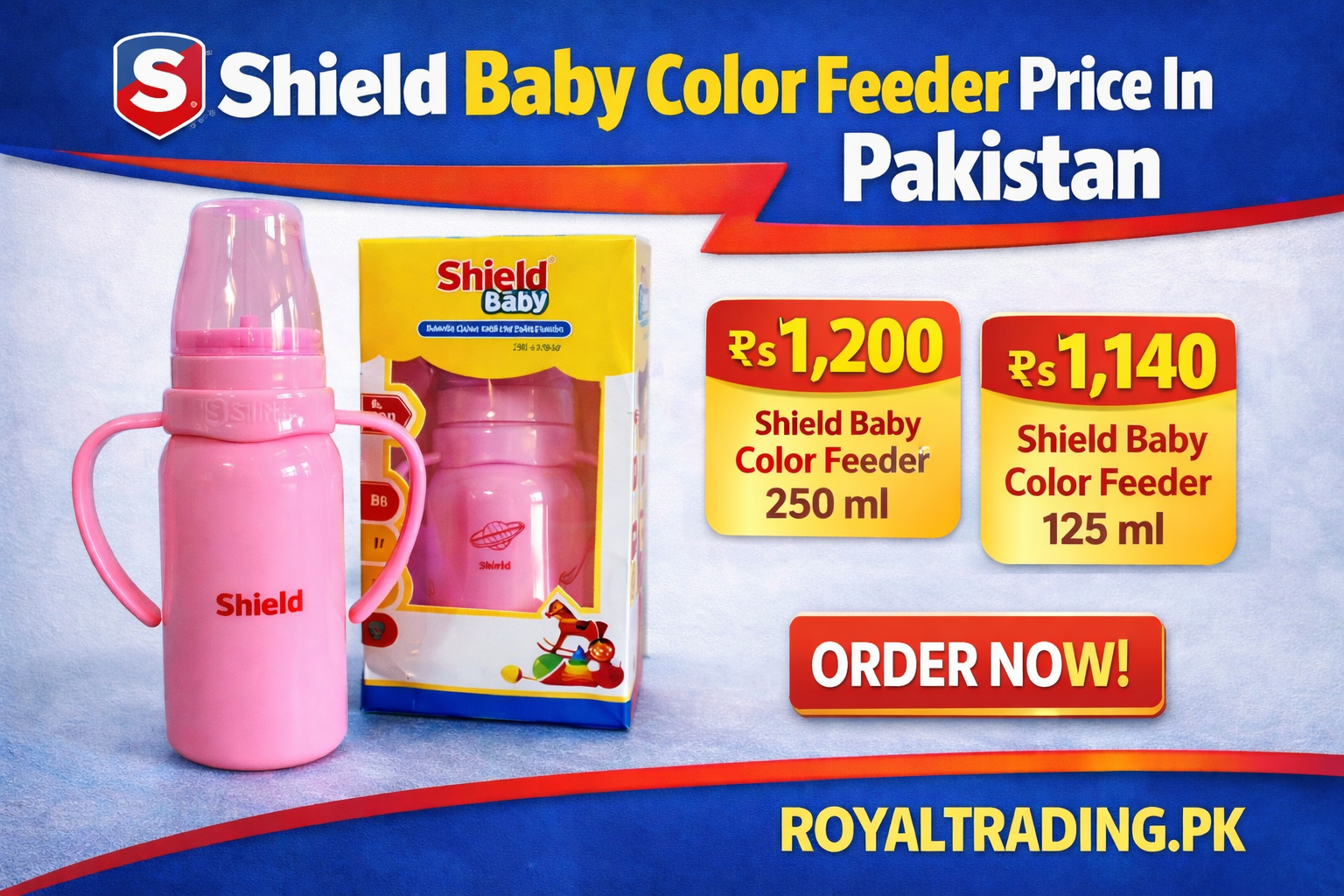
Shield Baby Feeder 250 ml – 6 Pcs: ₨ 1,200
This pack contains six feeding bottles, each holding 250 ml of liquid. This is perfect for babies who are a few months old and drink more milk at one time. When you calculate the price, each bottle costs only ₨ 200, which is very affordable.
Shield Baby Feeder 125 ml – 6 Pcs: ₨ 1,140
This pack also has six bottles, but each one is smaller at 125 ml. These are great for newborn babies who drink less milk. Each bottle costs about ₨ 190, making it even more budget-friendly.
Why These Prices Are Good Value
When you compare Shield Feeder prices with other brands in Pakistan, you’ll see that Shield offers excellent value. Here’s why:
Cost Per Bottle: At around ₨ 190-200 per bottle, you’re getting a quality product at a reasonable price. Other imported brands can cost ₨ 500-1000 per bottle.
Pack of Six: Buying six bottles at once is smart because:
- You always have clean bottles ready
- You save money compared to buying individually
- You can keep some at home and some at grandparents’ house
- If one breaks, you have backups
Local Manufacturing: Shield products are made locally in Pakistan, which keeps costs down while maintaining quality standards.
Features of Shield Baby Feeders
Shield Baby Feeders come with several important features that make them safe and practical for your baby.
Safe Materials
Shield bottles are made from food-grade plastic that doesn’t contain harmful chemicals like BPA (Bisphenol A). BPA is a chemical that can be dangerous for babies, so BPA-free bottles are very important.
Clear Measurement Marks
The bottles have clear marks on the side showing how much milk is inside. This helps you measure exactly how much your baby drinks. The marks are in milliliters (ml) and sometimes ounces (oz).
Anti-Colic Design
Many Shield feeders have an anti-colic design. This means they reduce the amount of air your baby swallows while drinking. When babies swallow too much air, they get gas and stomach pain, which makes them cry. The anti-colic design helps prevent this problem.
Soft Nipple
The nipple (the part the baby sucks on) is made from soft silicone or latex. It’s designed to feel natural, like a mother’s breast. This makes it easier for babies to accept the bottle.
Easy to Clean
Shield bottles have a wide mouth, making them easy to clean. You can put your hand inside to scrub properly, ensuring no milk residue stays inside.
Heat Resistant
These bottles can handle hot water, which is important for sterilization. You need to clean baby bottles in very hot water to kill germs.
Different Sizes: Which One to Choose?
125 ml Feeders – Best For:
Newborn Babies (0-2 months): New babies have tiny stomachs and drink small amounts frequently. A 125 ml bottle is perfect for them.
Water and Juice: As babies grow, they need water and juice in small amounts. The 125 ml size is ideal for this.
Travel: Smaller bottles are easier to carry when you go out with your baby.
Medicine: If your baby needs liquid medicine, a small bottle is more convenient.
250 ml Feeders – Best For:
Older Babies (3+ months): As babies grow, they drink more milk at one time. The 250 ml size is better for them.
Reducing Feeding Frequency: Larger bottles mean you don’t have to feed as often, which is helpful at night.
Formula Milk: If you’re mixing formula powder with water, the bigger bottle gives you more space to shake and mix properly.
How to Use Shield Baby Feeders Properly
Using a baby feeder correctly is important for your baby’s health and safety.
Before First Use
- Unpack carefully: Remove all bottles and parts from the package
- Wash thoroughly: Clean with warm soapy water
- Sterilize: Boil in hot water for 5-10 minutes or use a sterilizer
- Dry completely: Let all parts air dry on a clean towel
Preparing a Bottle
- Wash your hands: Always start with clean hands
- Use clean water: Boil water and let it cool slightly
- Measure carefully: Add the right amount of formula powder
- Shake well: Mix until no lumps remain
- Test temperature: Put a few drops on your wrist – it should feel warm, not hot
Feeding Your Baby
- Hold your baby: Keep the baby’s head higher than the stomach
- Tilt the bottle: Make sure the nipple is always full of milk, not air
- Watch the pace: Let your baby drink at their own speed
- Burp regularly: Stop midway to burp your baby
- Never prop the bottle: Always hold the bottle and baby during feeding
After Feeding
- Discard leftover milk: Don’t save milk that’s been in the bottle for later
- Rinse immediately: Clean the bottle right away to prevent milk from drying
- Deep clean: Take apart all pieces and wash thoroughly
- Sterilize regularly: Clean bottles should be sterilized at least once daily
Quality Standards and Safety
Parents always worry about whether products are safe for their babies. Here’s what you should know about Shield Feeder safety.
Quality Certifications
Shield products generally meet basic safety standards for baby products in Pakistan. Look for:
- BPA-free certification
- Food-grade material certification
- Manufacturing standards compliance
Regular Inspection
Even with quality products, you should regularly check:
- Nipples: Look for cracks, tears, or discoloration
- Bottles: Check for scratches or cloudiness
- Measurement marks: Ensure they’re still clear and visible
- Smell: Any strange smell means it’s time to replace
When to Replace Feeders
Replace bottles and nipples when you notice:
- Any damage or wear
- After 3-4 months of regular use
- If they become stained or cloudy
- When nipples become sticky or swollen
- After any illness to prevent reinfection
Common Problems and Solutions
Even good products can have issues. Here are common problems parents face with feeders and how to solve them.
Baby Refuses the Bottle
Problem: Your baby won’t drink from the feeder.
Solutions:
- Try different nipple shapes
- Warm the nipple under warm water
- Have someone else feed the baby (not mom)
- Choose a time when baby is hungry but not crying
- Be patient – it may take several tries
Milk Leaks from Bottle
Problem: Milk drips or leaks during feeding.
Solutions:
- Check if the nipple is screwed on tightly
- Make sure the nipple isn’t damaged
- Don’t overfill the bottle
- Check if all parts are properly assembled
- Replace worn-out rings and caps
Baby Gets Gas
Problem: Your baby seems uncomfortable and gassy after feeding.
Solutions:
- Keep the bottle tilted so nipple is full of milk
- Burp the baby during and after feeding
- Try anti-colic bottles
- Feed in an upright position
- Don’t shake the bottle too vigorously (creates bubbles)
Cleaning Difficulties
Problem: Milk residue or smell remains after washing.
Solutions:
- Use a bottle brush to scrub inside
- Soak in warm soapy water before washing
- Use baking soda to remove odors
- Sterilize regularly
- Replace bottles if smell persists
Essential Accessories for Shield Feeders
To use your Shield Feeders effectively, you’ll need some additional items.
Bottle Brush
A good bottle brush helps you clean the inside of bottles properly. Look for one with:
- Long handle to reach the bottom
- Soft bristles that don’t scratch
- Nipple cleaner attachment
- Sturdy construction
Price in Pakistan: ₨ 100-300
Sterilizer
Sterilizers kill germs and bacteria. You have options:
Electric Sterilizer: ₨ 2,000-5,000
Microwave Sterilizer: ₨ 800-1,500
Boiling Method: Free (use a pot)
Bottle Warmer
To warm refrigerated milk quickly:
Electric Warmer: ₨ 1,500-3,000
Warm Water Method: Free (use a bowl of hot water)
Extra Nipples
Always keep spare nipples because they wear out faster than bottles.
Shield Nipples: ₨ 50-100 each
Different flow rates available:
- Slow flow (0-3 months)
- Medium flow (3-6 months)
- Fast flow (6+ months)
Drying Rack
A drying rack keeps bottles clean while air-drying.
Price: ₨ 500-1,500
Insulated Bottle Bag
For keeping milk warm or cool while traveling.
Price: ₨ 300-800
Customer Reviews and Experiences
Based on feedback from Pakistani parents, here’s what people say about Shield Feeders.
Positive Feedback
Affordable: “I bought six bottles for the price of one imported bottle. Great value!”
Easy to Find: “Available in every baby shop in my city. No need to order online.”
Simple Design: “No complicated parts. Easy to assemble and clean.”
Durable: “Been using the same set for four months with no problems.”
Baby Accepted It: “My baby had no trouble switching from breast to Shield feeder.”
Constructive Criticism
Basic Features: “Doesn’t have the fancy anti-colic system of expensive brands.”
Nipple Quality: “The nipples need to be replaced more often than premium brands.”
Limited Designs: “Only basic colors available, no fancy patterns.”
Size Options: “Wish they had more size options like 180ml or 300ml.”
Frequently Asked Questions (FAQs)
Q1: Are Shield Feeders safe for newborns?
Yes, Shield Feeders are safe for newborn babies. They are made from BPA-free materials and designed specifically for infant feeding. Always choose the 125ml size with slow-flow nipples for newborns.
Q2: How often should I replace Shield Baby Feeders?
Replace the bottles every 4-6 months with regular use, or sooner if you notice any damage, cloudiness, or scratches. Nipples should be replaced every 2-3 months or when they show signs of wear.
Q3: Can I sterilize Shield Feeders in boiling water?
Yes, Shield Feeders can be sterilized by boiling them in water for 5-10 minutes. Make sure all parts are completely submerged. You can also use electric or microwave sterilizers.
Q4: Where can I buy Shield Feeders in Pakistan?
Shield Feeders are available at baby shops, pharmacies, supermarkets, and online platforms like Daraz.pk. They’re widely distributed across major cities including Karachi, Lahore, Islamabad, and Faisalabad.
Q5: What’s the difference between 125ml and 250ml Shield Feeders besides size?
The main difference is capacity. The 125ml bottles are designed for newborns and small feeds, while 250ml bottles are for older babies who drink more. Both have similar features and quality.
Q6: Are Shield Feeders dishwasher safe?
While some parents put them in dishwashers, it’s better to hand wash baby bottles to ensure thorough cleaning and to prevent wear from high dishwasher heat. Hand washing also helps you inspect each bottle carefully.
Q7: Can I use Shield Feeders for both breast milk and formula?
Yes, Shield Feeders work perfectly for both breast milk and formula milk. They can also be used for water, juice, or any other liquid appropriate for your baby’s age.
Q8: Do Shield Feeders come with a warranty?
Shield products typically don’t come with a warranty since they’re consumable items. However, if you receive a defective product, most retailers will exchange it if you report it immediately.
Q9: What nipple flow rate should I use for my baby?
For newborns (0-3 months), use slow flow nipples. For babies 3-6 months, medium flow works well. For babies over 6 months, you can try fast flow nipples. Always watch your baby – if milk flows too fast and they choke, use a slower nipple.
Q10: Are there any harmful chemicals in Shield Feeders?
Shield Feeders are marketed as BPA-free, meaning they don’t contain Bisphenol A, a harmful chemical. However, always buy from authorized dealers to ensure you’re getting genuine products that meet safety standards.
Tips for First-Time Parents
If you’re new to using baby feeders, here are helpful tips:
Start Early
If you plan to combine breastfeeding with bottle feeding, introduce the bottle around 3-4 weeks. This gives your baby time to adjust while still maintaining breastfeeding.
Be Consistent
Once you start bottle feeding, do it regularly so your baby stays comfortable with it. Occasional bottle feeding can be confusing for babies.
Right Temperature
Milk should be body temperature – not too hot, not too cold. Test it on your wrist before feeding.
Pace Feeding
Let your baby control the pace. Take breaks, allow them to burp, and don’t force them to finish the bottle if they’re full.
Bonding Time
Bottle feeding is bonding time. Hold your baby close, make eye contact, and talk softly. Don’t just prop the bottle and walk away.
Hygiene is Critical
Babies have weak immune systems. Always use clean, sterilized bottles. Wash your hands before preparing bottles.
Stock Up Wisely
Having six bottles (one pack of Shield Feeders) is usually enough. You can wash and reuse them throughout the day.
Conclusion
Shield Baby Feeders offer Pakistani families an affordable, safe, and practical solution for infant feeding. At ₨ 1,140 for six 125ml bottles or ₨ 1,200 for six 250ml bottles, they provide excellent value for money.
Whether you’re a parent looking for reliable feeding bottles or an entrepreneur considering baby products for your business, Shield Feeders are worth considering. They may not have all the fancy features of expensive imported brands, but they deliver on the basics: safe materials, appropriate design, and affordability.
For parents, remember that the most expensive product isn’t always the best. What matters most is that the feeder is safe, clean, and suitable for your baby’s age. Shield Feeders meet these requirements while being gentle on your budget.
For business owners, Shield Feeders represent a product with steady demand, reasonable profit margins, and appeal to the mass market. With the right marketing and customer service, you can build a successful business around baby feeding products.
Remember, every baby is different. What works for one might not work for another. If you try Shield Feeders and they work well for your baby, great! If not, don’t worry – there are other options available. The most important thing is that your baby is fed, healthy, and happy.
Final Thoughts: Shield Feeders prove that quality baby products don’t have to be expensive. For Pakistani families and businesses, they offer a practical solution that balances cost, quality, and functionality. As you navigate the journey of parenthood or business ownership, Shield Feeders can be a trusted companion along the way.