Touch Condoms Review Pakistan: Every Marketing Claim on the Listing, Checked
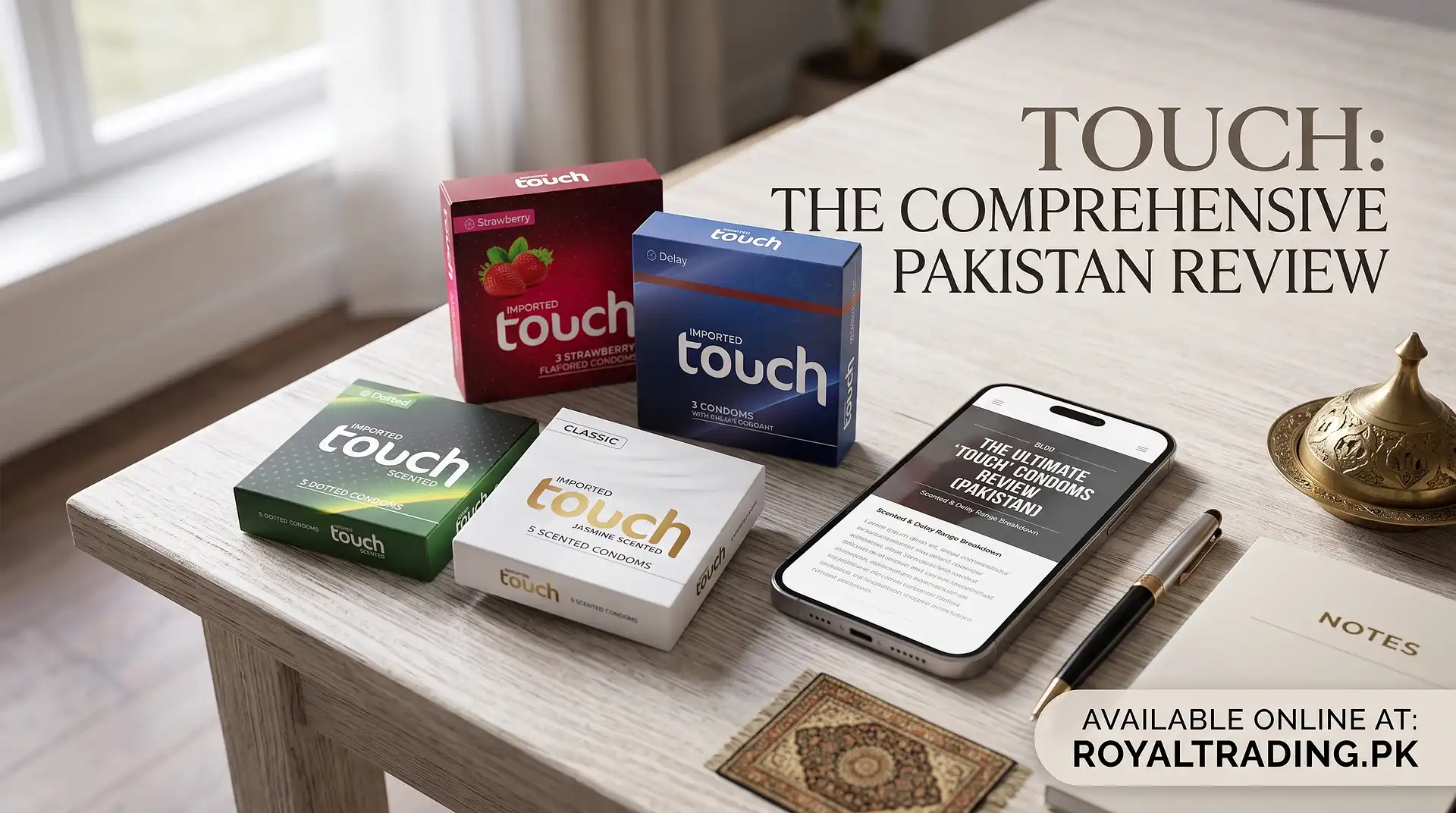
Every condom listing makes claims. Almost none of them get checked. This piece does that specifically for Touch’s four current products at Royal Trading — not by describing the lineup, but by pulling every claim off the actual page and sorting it into one of three buckets: a disclosed, checkable mechanism; a self-reported manufacturer fact; or marketing language that isn’t verifiable either way. None of those three categories is automatically bad. Conflating them is the actual problem.
The Comparison Table
| Product | Price | Price/Piece | Central Claim | Verdict |
|---|---|---|---|---|
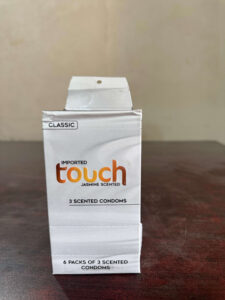
| Jasmine Scented | Rs. 600 | Rs. 33.3 | “Enhance sensory pleasure” | Subjective marketing language — not a factual claim to verify |
| Ribbed Red | Rs. 600 | Rs. 33.3 | Title says “Ribbed,” description says “Dotted Red” | Internal contradiction — unresolved on the seller’s own page |
| Dotted Green | Rs. 600 | Rs. 33.3 | “Raised dots for enhanced mutual stimulation” | Internally consistent — title and description agree |
| Blue Delay | Rs. 900 | Rs. 50 | “Safe, effective delay lubricant” | Mechanism disclosed (delay lubricant); “safe, effective” unverified |
That table is the whole argument in miniature: three products at an identical price point with three different levels of claim reliability, and one premium product where the core mechanism is at least named, even if the adjectives around it aren’t backed by anything citable.
Claim 1: “Premium Latex Ensures Safety and Natural Feel”
This phrase, or a close variant, appears across multiple listings in the Touch lineup. It’s the kind of claim that sounds like a certification but isn’t one — there’s no batch number, no ISO 4074 reference (the actual international standard for latex condom testing), no WHO prequalification listing attached to it anywhere on the page. That doesn’t mean the latex is low quality. It means “premium” is doing marketing work here, not disclosure work, and a buyer can’t verify it from the listing regardless of which way they’d guess.
Verdict: unverifiable marketing language, not a false claim — just not a checkable one.
Claim 2: “Ribbed” vs. “Dotted Red” — The One Real Contradiction
This is the only claim on the page that isn’t just vague — it’s internally inconsistent. The product title is “Touch Ribbed Condoms Red.” Its own description opens with “Turn up the heat with Touch Dotted Red Condoms” and goes on to describe raised texture, not ribbing. Ribbed and dotted are physically different textures. This isn’t a matter of interpretation or marketing flourish — it’s two different factual claims about the same physical product, made in the same listing, that can’t both be accurate.
Verdict: unresolved factual contradiction. A buyer choosing this variant specifically for its texture is choosing based on a coin flip between the title and the description.
Claim 3: “Safe, Effective Delay Lubricant”
Split this claim in half, because its two halves deserve different verdicts. “Delay lubricant” is a disclosed mechanism — the listing tells you what’s functionally different about this product compared to the other three, which is more than several competing brands’ “delay” products do. “Safe, effective” is the seller’s own adjective pairing, unattached to any study, certification, or third-party test. The mechanism claim earns real credit. The adjectives don’t.
Verdict: partially disclosed, partially unverifiable — and worth noticing that a single sentence can be both.
Claim 4: Brand-Level Claims Not on This Page But Relevant to It
Greenstar Social Marketing, Touch’s manufacturer, states on its own official brand page that Touch is Pakistan’s second highest-selling condom brand, and documents a 1996 launch along with a 2019 Strawberry variant and 2021 Jasmine Scented launch. These are real, traceable claims — but they’re self-reported by the manufacturer, not independently audited market research. That distinction matters less for a one-time buyer and more for anyone using brand reputation as a proxy for product quality on a specific purchase.
Verdict: real and sourced, but self-reported — treat as manufacturer testimony, not neutral market data.
You Might Also Like
What the Pattern Actually Tells You
Line up all four verdicts and a shape emerges: exactly one claim across the entire lineup is a true, uncheckable coin-flip (Ribbed/Dotted Red), one product discloses more than it needs to (Blue Delay’s named mechanism), and the rest is standard, harmless-but-unverifiable retail marketing language that every condom brand in this market uses in some form. That’s a more useful takeaway than “Touch is a good brand” or “Touch is a bad brand” — it tells you specifically where to trust the listing and where to independently verify before you buy.
The Honest Limitation Here
This audit only covers what’s written on the page — it can’t confirm or deny latex quality, actual delay-lubricant composition, or manufacturing certification status, because none of that is disclosed on the listing to audit in the first place. An absence of a checkable claim isn’t evidence the product fails that standard; it’s just evidence the standard isn’t being disclosed here, which is a gap in the retailer’s documentation, not necessarily in the product itself.
Where This Leaves You
If you’re buying on trust in the brand, Greenstar’s documented history gives Touch a real, if self-reported, edge. If you’re buying on trust in this specific listing, exactly one of four products (Dotted Green) has a fully internally consistent description, and exactly one (Blue Delay) discloses more mechanism than its category average — everything else sits in ordinary, unverifiable retail-marketing territory that’s neither a red flag nor a reason for extra confidence.
FAQ Section
How do you know if a condom brand’s marketing claims are true?
Check whether the claim names something specific and checkable — an ingredient, a certification number, a standard like ISO 4074 — versus adjectives like “premium” or “safe” with nothing attached to them. The first category can be verified independently; the second can’t, and isn’t necessarily false for that reason.
Why does the Touch Ribbed Red listing mention “Dotted” in its description?
That’s an inconsistency on the retailer’s own page — the product title says “Ribbed,” the description calls it “Dotted Red” and describes raised texture. It hasn’t been resolved by the seller, so a buyer can’t confirm which texture the product actually is from the listing alone.
Is “delay lubricant” the same as an active ingredient disclosure?
Not quite. Naming a delay lubricant tells you the mechanism category, which is more disclosure than many competing products offer, but it doesn’t specify the compound or concentration — that’s a step short of full ingredient transparency.
Does a brand’s market-share claim mean the product is higher quality?
Not directly. Market share and self-reported sales rank reflect distribution and marketing reach, not an independent quality or safety audit. They’re a reasonable trust signal, but a separate question from whether any single product’s specific claims hold up.